
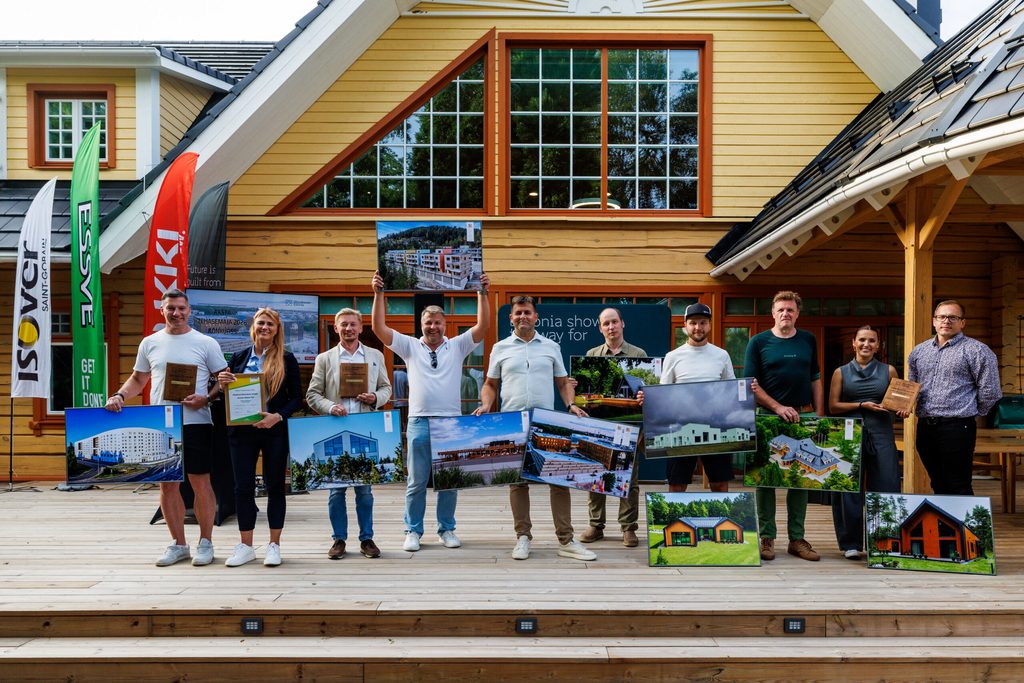
On 14 August, the winners of the Prefab House of the Year 2026 competition were announced at Järvselja Hunting Lodge. Now held for the 16th time, the competition featured 24 entries from 14 manufacturers, and for the first time, an international expert panel from Germany, the Netherlands and South Korea joined the evaluation. The title of Prefab House of the Year 2026 was awarded to EstNor OÜ for the Loodusmaja Taru timber facade.
This year’s competition was exceptionally diverse – entries spanned from Iceland to Portugal, with technologies ranging from panel houses and CLT high-rises to handcrafted log buildings and factory-produced facade systems. According to the jury, this reflects the growing capability of Estonia’s timber construction sector: increasingly complex engineering solutions are being produced for a wide range of building types and markets.
For the first time, international experts from Germany, the Netherlands and South Korea participated in the evaluation, bringing a fresh and broader perspective to the competition. Their role was not to select the winners, but to highlight projects that stand out for their architectural quality, innovation and international relevance.
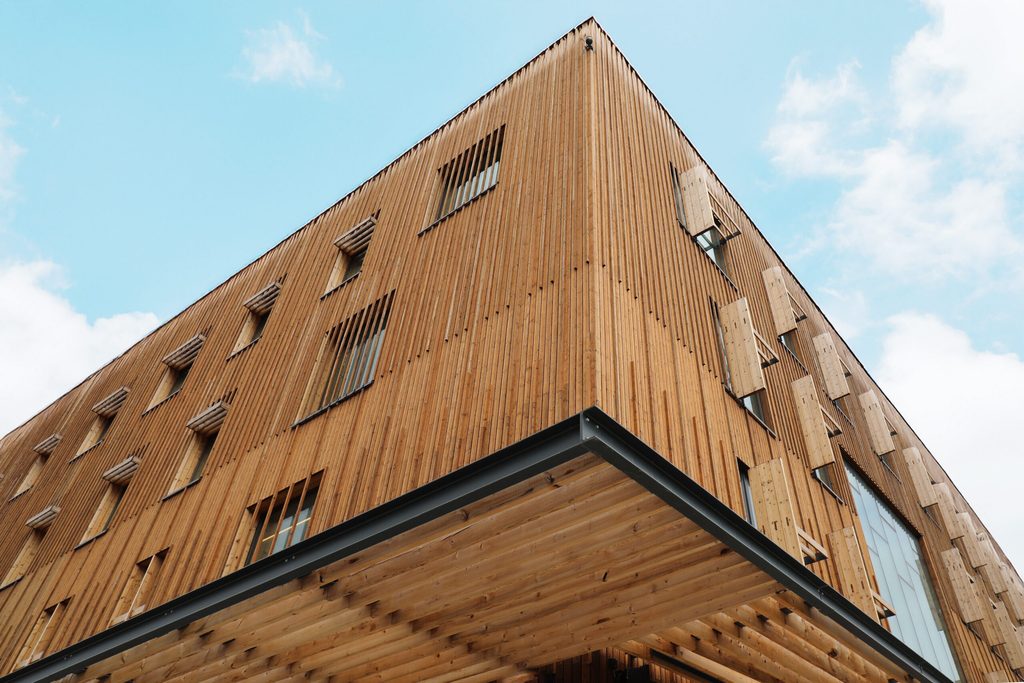
The overall winner, EstNor OÜ Loodusmaja Taru timber facade, is an innovative solution combining sustainability and architectural distinction. The facade integrates natural wood, large glazed surfaces and mineral finishing materials to create a contemporary yet timeless appearance. Jury member and architect Veronika Valk-Siska described the winning entry as a modern, environmentally conscious and architecturally outstanding solution, characterised by the innovative use of wood as a renewable material. She added that the material choices and detailing emphasise a simple yet elegant Nordic aesthetic, and that the harmonious relationship between the interior and exterior creates a coherent whole. The Loodusmaja facade received two awards on the evening: in addition to the overall title, it also won Best Facade Elements Project, with the award sponsored by Ruukki.
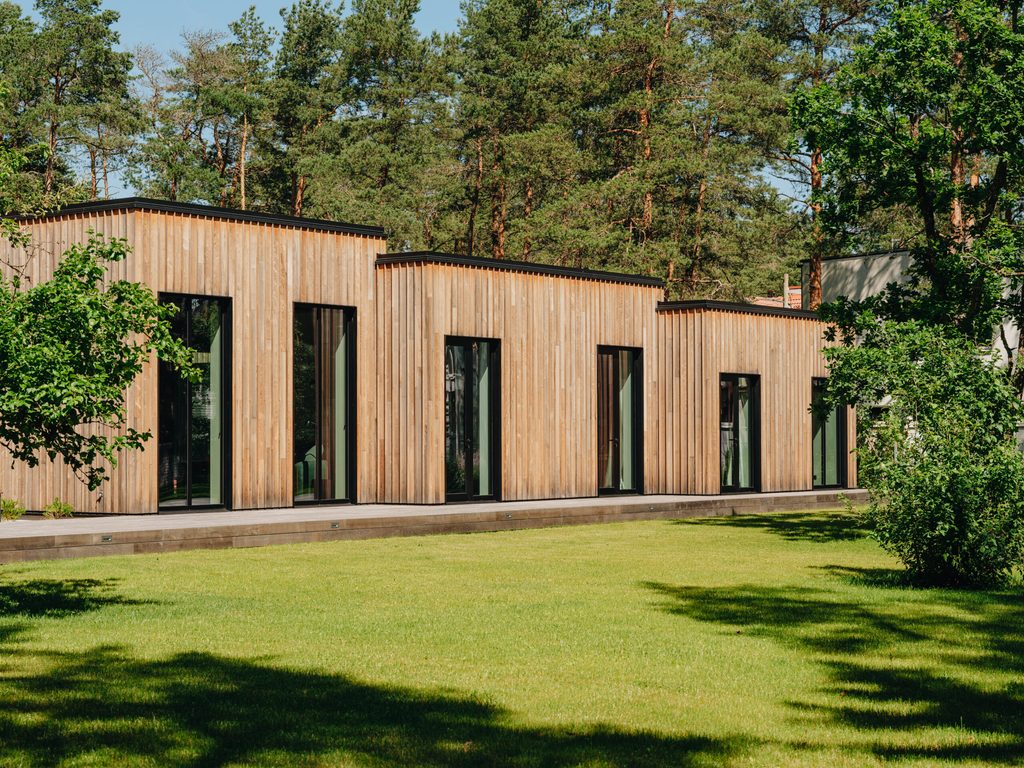
The Best Private House title went to Finnlog OÜ for a house in Nõmme. The home’s minimalist vertical thermally treated timber cladding blends beautifully with the surrounding Nomme pines, while the interiors open gracefully onto the landscape. Nearly half of all entries this year competed in the private house category, making the title especially coveted. The house also caught the attention of the international jury. Emre Onur, Editor-in-Chief of the German architecture magazine db deutsche bauzeitung, noted that the building is aesthetically impressive both inside and out – the high level of finish gives no indication that this is a factory-produced modular house.
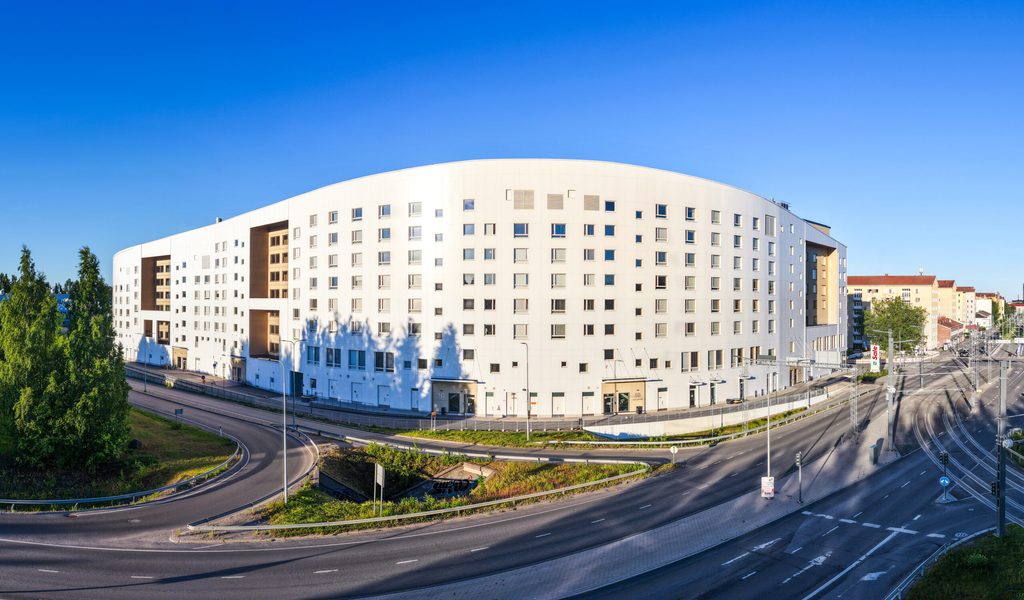
The Best Apartment Building title was awarded to Matek AS for their CLT modular student housing in Finland. The jury was impressed by the project’s ambition and complexity. The volumetric composition and material choices create a pleasant courtyard environment for the student village. The international jury particularly valued the technical solution: the 6-7-storey CLT modular buildings meet fire resistance, acoustic and structural stability requirements typically associated with concrete construction – demonstrating that Estonian engineers continue to push the boundaries of timber construction.
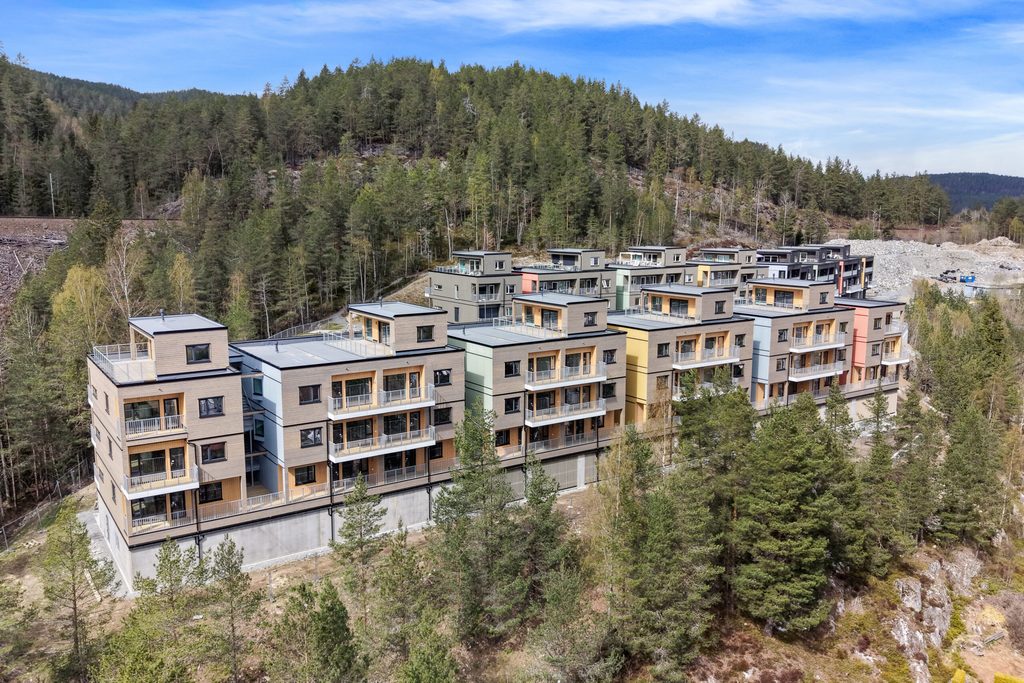
The Best Development title went to Kodumaja AS for their apartment development in Norway. The architecture, articulated with simple geometric volumes complemented by balconies and terraces, fits beautifully into the surrounding forest landscape. Both the Estonian and international jury agreed that the large-scale development has been broken down to a human scale and integrates naturally into its environment while maintaining a unified Nordic identity. Urban strategist Bob van der Zande from the Metropolitan Region of Amsterdam praised the cluster of smaller-scale blocks for preserving a human dimension, and the architectural quality that blends seamlessly with the forested setting.
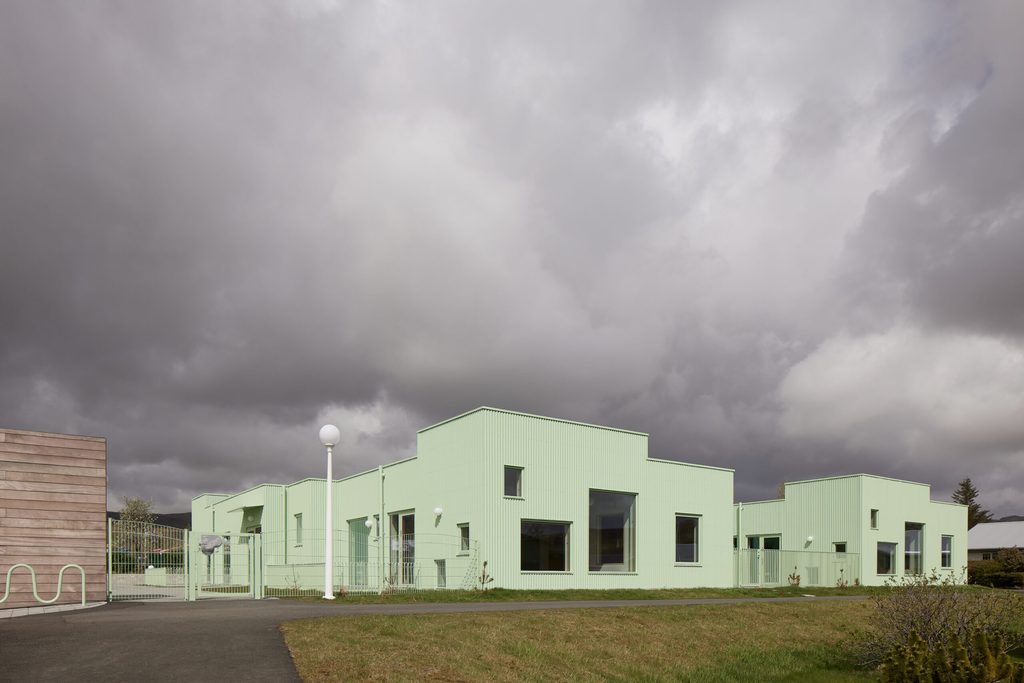
The Best Public Building title was awarded to Timbeco Woodhouse OÜ for a kindergarten produced for Iceland. The sensitively articulated architecture responds excellently to universal design principles and a contemporary approach to learning environments. The pastel green exterior, strong indoor-outdoor connectivity and timber-clad interiors create a child-friendly, coherent environment.
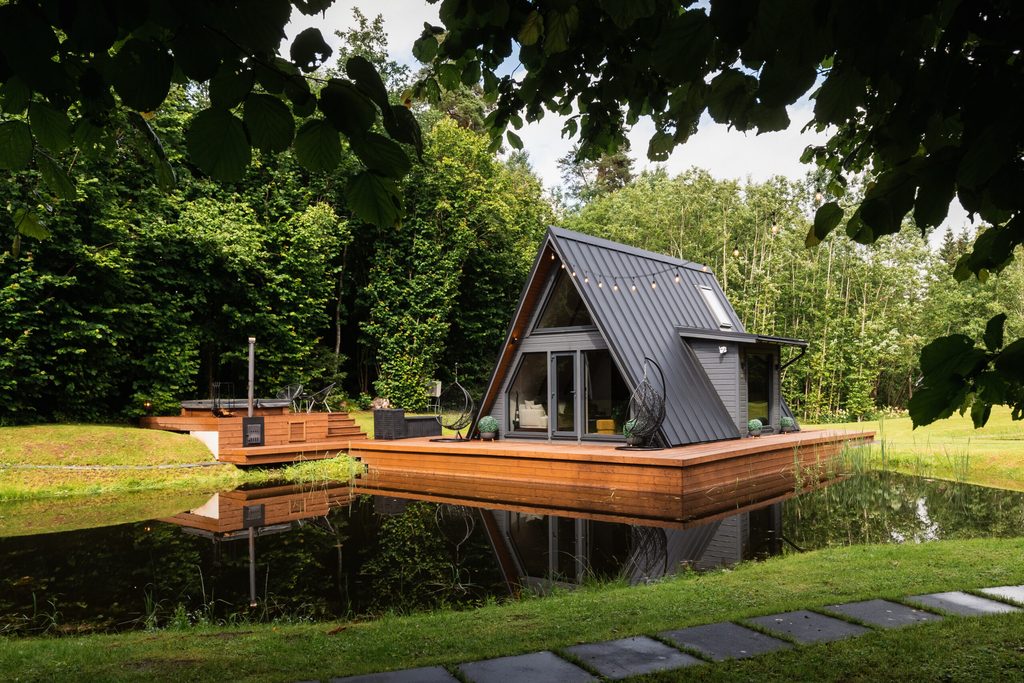
The Best Small Building title went to Avrame OÜ for a holiday cabin in Kambja parish. The sauna house architecture emphasises simplicity, user-friendliness and functionality – a wide terrace by the pond, generous natural light and a thoughtful interplay of light and dark tones create a harmonious whole.
The jury presented four special awards to entries that stood out beyond the main categories. The Best Handcrafted Log House award went to Jarvselja Hunting Lodge (Hobbiton OÜ), where the historical and the contemporary blend harmoniously into a unified whole. Stroomi Beach House (EstNor OÜ) received the Best Use of Timber award, sponsored by Raitwood – its prefabricated timber frame modules and elements deliver exceptional factory readiness, and the modular system can be disassembled, recombined and extended as needed. The Scalability Award went to Thorn Houses OÜ for their development in Laane-Harju, where 70 factory-produced homes form a cohesive and enjoyable living environment. The Best Community Building Complex award went to Welement AS for the Narva Care Home development, where single-storey cottages offer residents a safe and homely environment with thoughtfully implemented universal design principles.
The competition’s supporters presented four sponsor awards: the VELUX Best Lighting Solution award went to Pinska Prefab OÜ for a house in Neeme; the AkzoNobel Best Colour Solution award to Timbeco Woodhouse OÜ for a house in Anija; the ITW Construction Products Paslode Special Prize to EstNor OÜ for Stroomi Beach House; and the Isover Saint-Gobain Most Energy Efficient Building award to Soome Maja OÜ for a house in Hiiumaa. In the public vote on moodnekodu.ee, the People’s Choice award went to Soome Maja OÜ’s house in Hiiumaa, praised for its strong sense of place and distinctive architecture.
Prefab House of the Year 2026 Results:
- Overall Winner & Best Facade Elements Project – EstNor OÜ, Loodusmaja Taru facade
- Best Apartment Building – Matek AS, student housing in Finland
- Best Development – Kodumaja AS, apartment development in Norway
- Best Public Building – Timbeco Woodhouse OÜ, kindergarten in Iceland
- Best Private House – Finnlog OÜ, house in Nõmme
- Best Small Building – Avrame OÜ, holiday cabin in Kambja
- Best Handcrafted Log House – Hobbiton OÜ, Jarvselja Hunting Lodge
- Best Use of Timber (Raitwood) – EstNor OÜ, Stroomi Beach House
- Scalability Award – Thorn Houses OÜ, development in Lääne-Harju
- Best Community Building Complex – Welement AS, Narva Care Home development
- VELUX Best Lighting Solution – Pinska Prefab OÜ, house in Neeme
- AkzoNobel Best Colour Solution – Timbeco Woodhouse OÜ, house in Anija
- ITW Construction Products Paslode Special Prize – EstNor OÜ, Stroomi Beach House
- Isover Saint-Gobain Most Energy Efficient Building – Soome Maja OÜ, house in Hiiumaa
- People’s Choice (moodnekodu.ee) – Soome Maja OÜ, house in Hiiumaa
All competition entries can be viewed on the moodnekodu.ee website.
The Prefab House of the Year competition is organised by the Estonian Woodhouse Association (Woodhouse Estonia). The competition is open to all Estonian companies that produce timber buildings under factory conditions.
The jury comprised TalTech Professor of Building Physics Dr Targo Kalamees, TalTech Vice-Rector for Research Professor Dr Jarek Kurnitski, architects Veronika Valk-Siska and Markus Kaasik (architectural firm 3+1), journalist Irmeli Karja (Delfi/Ekspress Meedia) and Wood House Association development advisor Elar Vilt. For the first time, international experts also participated: Emre Onur, Editor-in-Chief of db deutsche bauzeitung, and Jakob Schoof, Deputy Editor-in-Chief of DETAIL magazine, from Germany; urban strategist Bob van der Zande from the Metropolitan Region of Amsterdam; and Seunghee Kang, Chairman of the Korea Wood Construction Association.
Prefab House of the Year 2026 was supported by Akzo Nobel Baltics AS, ESSVE Estonia AS, Saint-Gobain Eesti AS / Isover, ITW Construction Products OU, Rait AS / Raitwood, Ruukki Products AS, VELUX Eesti OU and Delfi / Moodnekodu.ee.